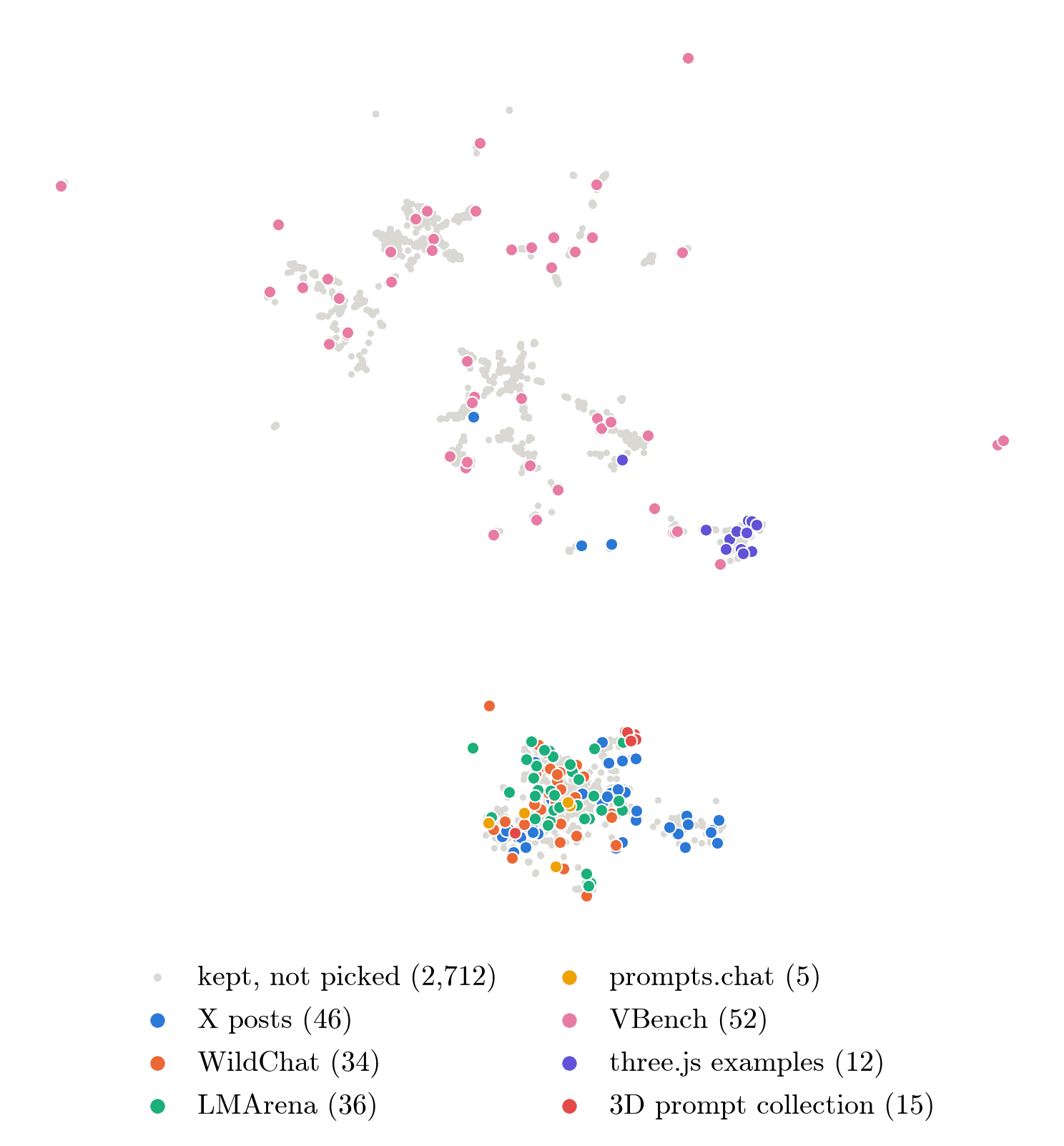
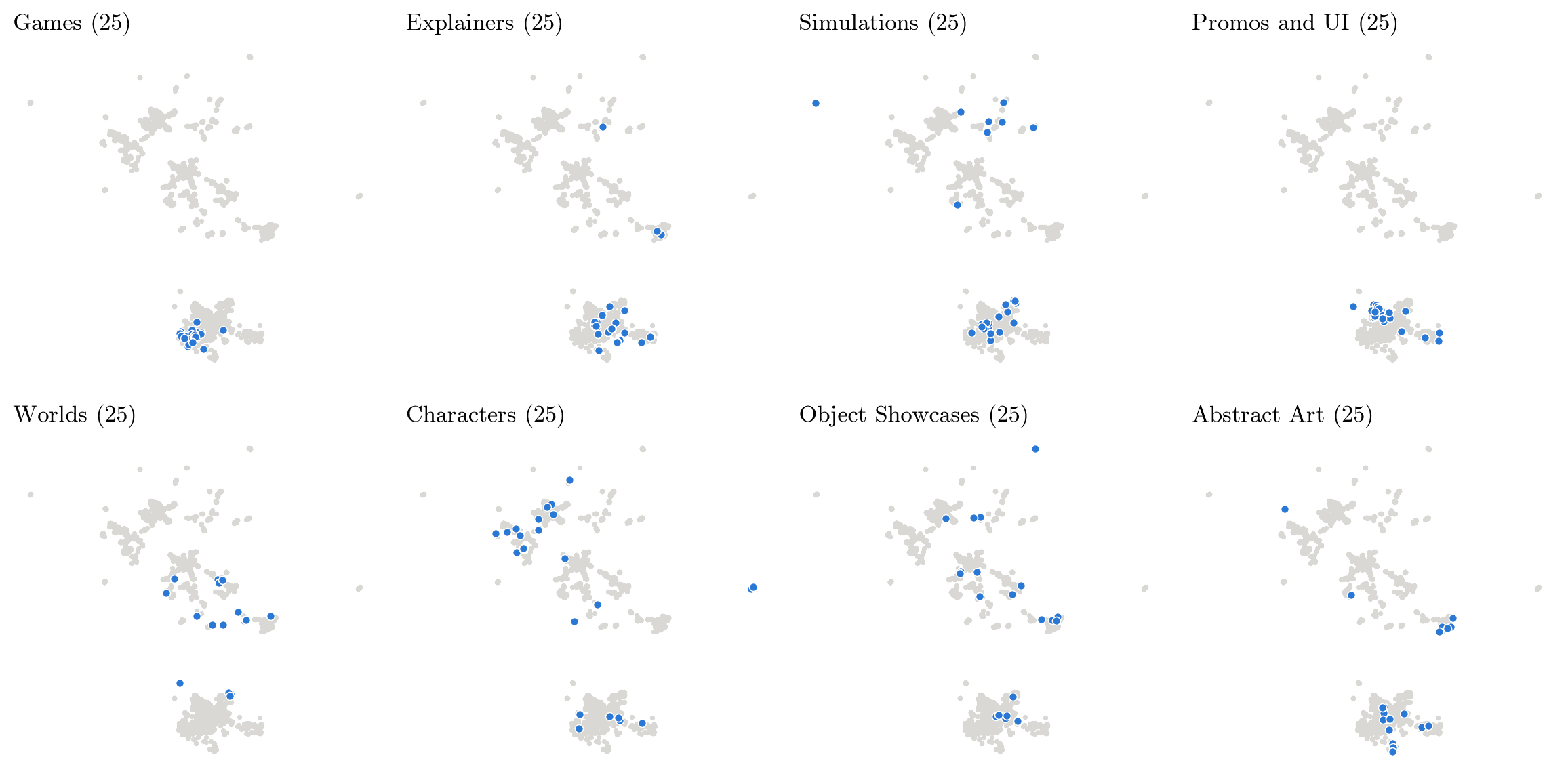
When a new language model comes out, one of the most common ways to show it off is a three.js animation: a single clip of a scene the model wrote in code, chosen by the person posting it. This benchmark ranks language models on that task under fixed conditions. Every model receives the same 200 prompts, drawn from requests people post on X and type into chatbots and widened with scene descriptions from video benchmarks, and writes one HTML page per prompt that plays a three.js animation. Each page is recorded as a 7-second clip, and human annotators compare the clips of two models for the same prompt, without seeing the prompt or the code, and say which one they would continue watching and which one they like more. The 925,025 responses collected this way are aggregated into ratings with a Bradley–Terry model; the details describe how the prompts were chosen and the clips made, and the methodology covers matchmaking and score estimation.
Full protocol in the global methodology.
We use crowd intelligence to deliver real, diverse human feedback at scale for model evaluation and post-training.
